
- Home page
- Top experiences
- Rest and relaxation
- Stargazing in Dordogne Périgord, astronomy and starry skies
- Rest and relaxation
- Top experiences
Stargazing in Dordogne Périgord, astronomy and starry skies
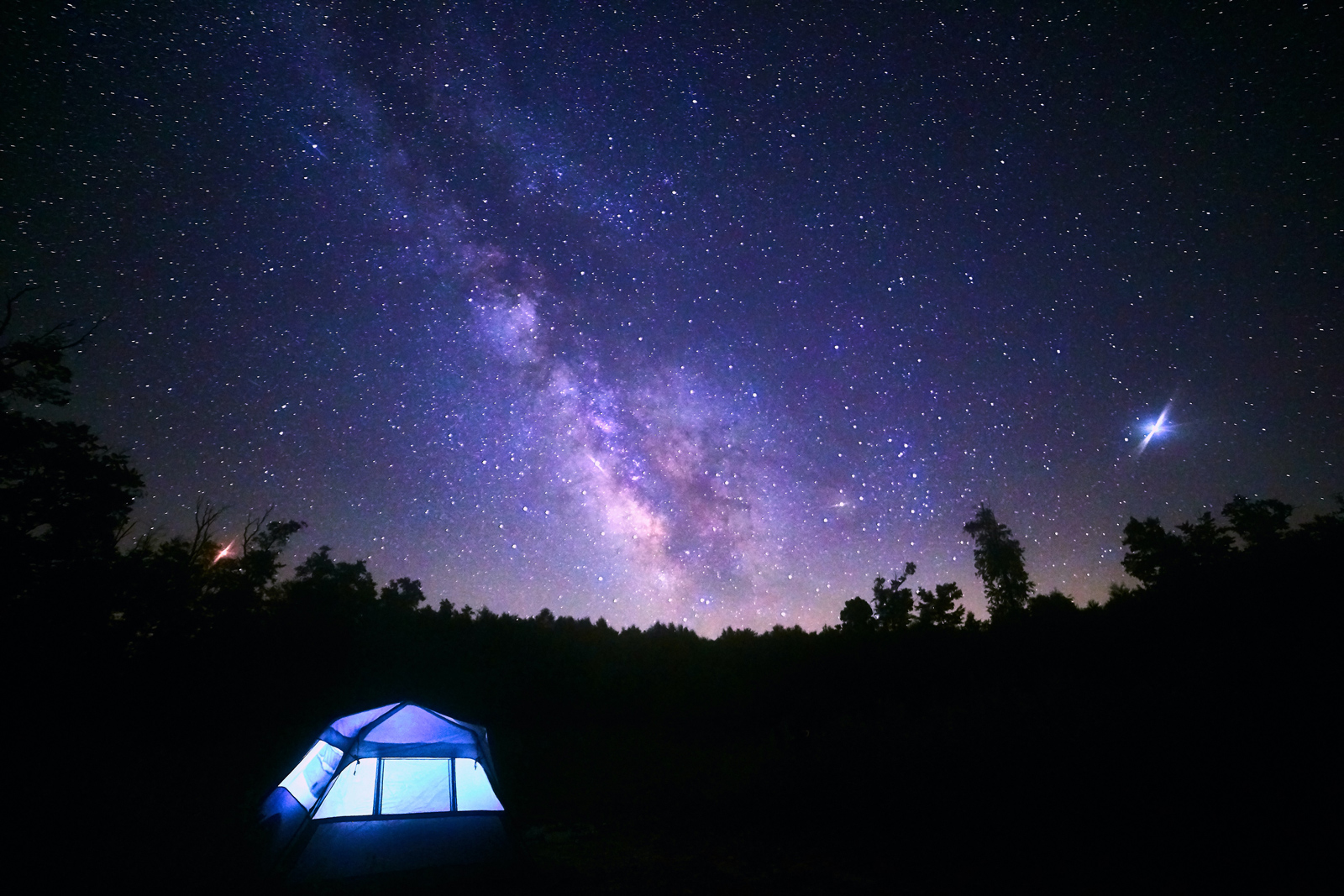
In the Dordogne, the observation of magnificent starry skies is possible because there are very natural regions where light pollution is low! Rural department, Périgord is also little polluted, which allows an observation without cloudiness. Take a map of the sky, a telescope or binoculars in your suitcase, to observe the stars in Périgord.
Article opening photo: Greg Rakozy / Unsplash
Astronomy Clubs in Périgord
The Astronomy Clubs meet regularly to make collective observations of stars, stars and various luminous objects. They are organized in associations, with members, but sometimes hold workshops for outsiders and special evenings for everyone, especially in summer. Their goal is to accumulate knowledge on the observation of the night sky in a particular place, using complex and specific equipment. They are always happy to share their knowledge with curious people of all ages!
In the Dordogne, there are several astronomy clubs , including two main ones:
- In Nantheuil de Thiviers, the Regulus astronomy club (the Haut Périgord Observatory) has been in place since 1985! It meets every first Friday of the month for club members and organizes public meetings in summer, especially for the night of the stars. The telescope they use is one of the largest in the region. Of the Newton type, it is positioned at an altitude of 270m and benefits from the remoteness of the lights of Périgueux (which is 35km away).
- The FLEP Astronomy Club has been in place for 25 years, located in Coulounieix-Chamiers.
The Night of the Stars in Périgord
The Night of the Stars takes place every year in August. These are 3 days dedicated specifically to the observation of starry skies throughout France. For the occasion, astronomy clubs and enthusiasts meet to understand, study, learn, observe together. Screening of documentaries, conferences, workshops, the Périgordins clubs offer you special evenings in Thiviers (Haut-Périgord Observatory), Coulounieix-Chamiers (the Rampinsolle Observatory), but also sometimes in Borrèze.
Stargazing sites in the Dordogne
To observe the stars in the Dordogne, there is no need to wait for the Nuit des Étoiles in August or to have complex and expensive equipment. Just turn off the lights, let your eyes acclimate to the dark, and raise your head to the sky. There are many places suitable for stargazing in Périgord. A plateau in height, far from the light pollution of cities, a clear night and let's go!
Think of the communes most in altitude, you can also go to the communes which benefit from a specific labeling of Starred Village. It is a recognition of the quality of the observations and the efforts of the municipalities to protect the night from light pollution (by reducing public lighting, signs, etc.) Here are the municipalities labeled in Périgord, it is a good point to departure! Find a field or a comfortable space, take a good blanket to stay still and not suffer the cold of the night.
- Bosset
- Bayac
- Borreze
- Nantheuil
- Milhac-de-Nontron
- Saint Estephe
- Champniers-et-Reilhac
- La Rochebeaucourt-and-Argentina
- Chassaignes
- Parcoul Chenaud
In general, going to the Regional Natural Park of Périgord-Limousin in the Périgord Vert, ensures you an optimal quality of observation. The Park has also applied for the "International Starry Sky Reserve" label, thus preserving the (very dark!) quality of its sky without light pollution.
The Vézère Valley is also a good place for stargazing. Climb the high roads to get out of the isolation of the cliffs and enjoy the spectacle of the night!
How to observe the stars?
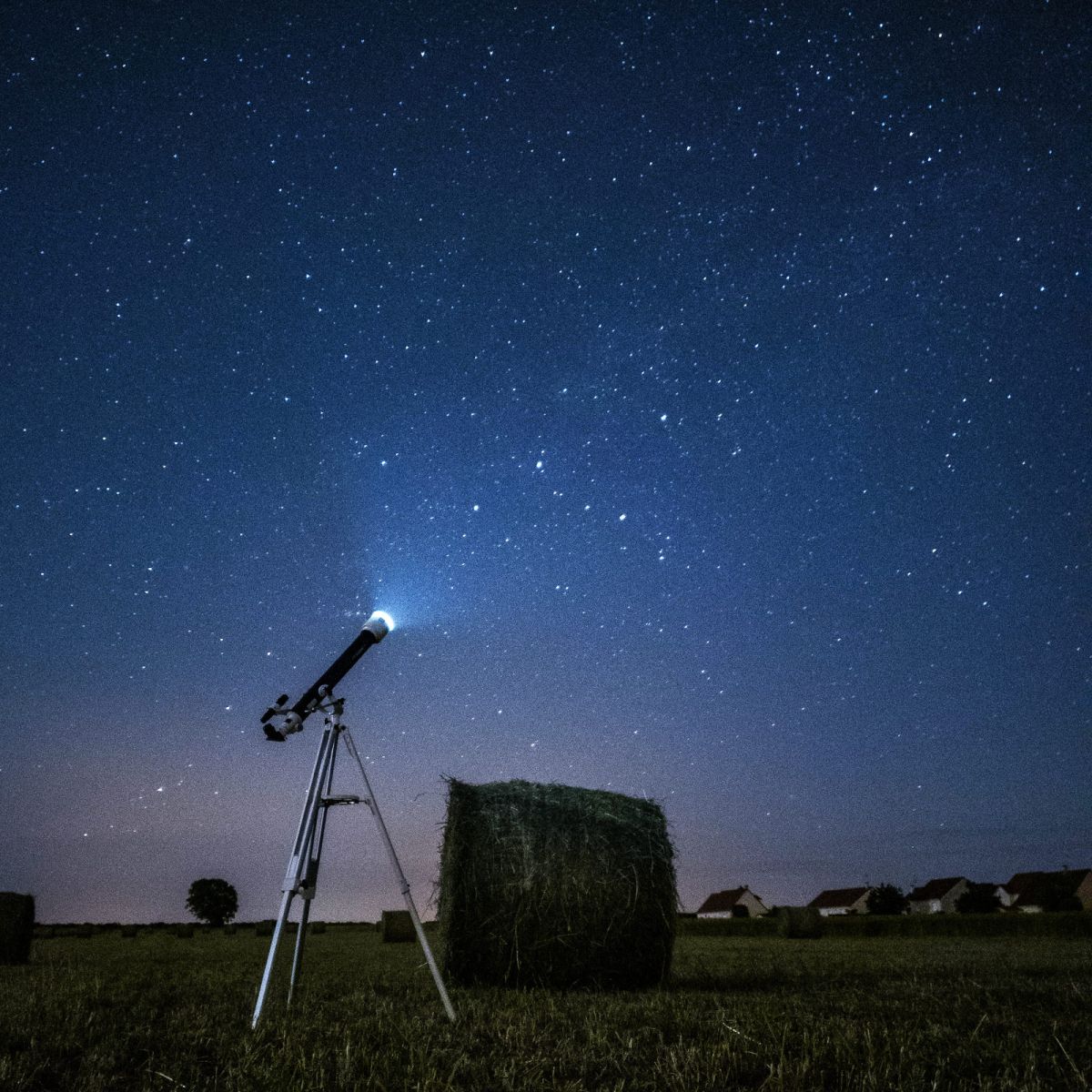
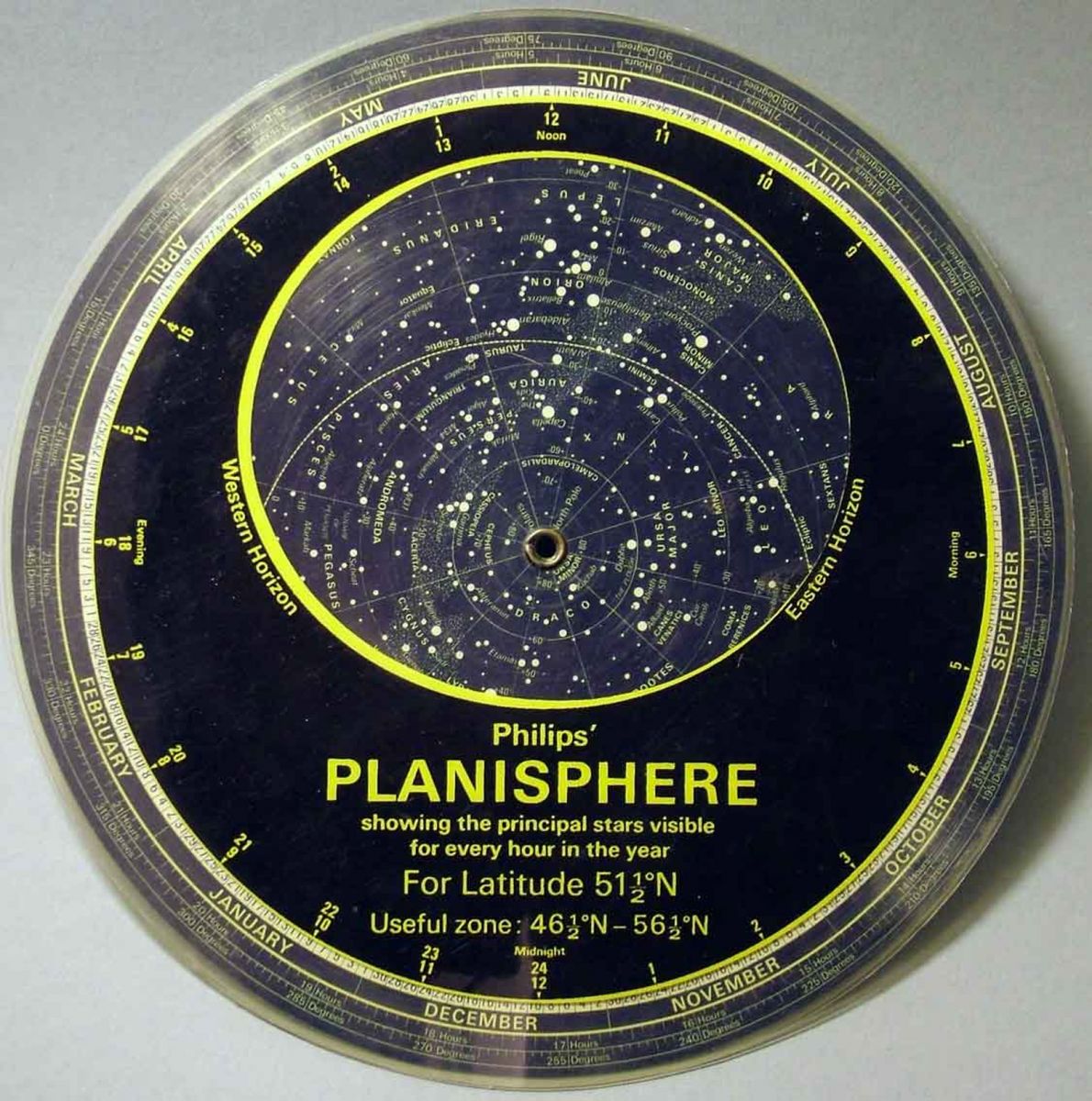
To help you as an amateur astronomer, you can bring some tools. Because observing is good, but understanding what you see is better! Know that it takes an average of 10 to 15 minutes for your eyes to get used to the darkness and reserve the best of stargazing for you. With the naked eye, you can very easily observe the Milky Way, a large band of bright stars more pronounced than the rest of the sky. To identify the constellations, you can easily find a sky map, which is also called a "star finder" or a planisphere map. It is very easy to find on the Internet. You have to print it and DIY it a bit like a blue parking disc. It can also be found in sports or nature/hiking stores.
A pair of binoculars is enough to admire the craters of the moon and for more distant objects, an amateur telescope is satisfactory. Today there is a way to convert your smartphone into a constellation finder! With free applications for the most part, SkyView, Nuit des Étoiles, SkyGuide… The first of the stars that we see in the sky, the famous Evening Star, is in fact a planet! It's Venus!
You have all the cards in hand to enjoy your nights in Périgord, with your head in the stars.
Did you like our article? Find others on the BLOG of the Guide du Périgord. Follow us on the Guide du Périgord Facebook page and on Instagram @guideduperigord
You will also like
The Greenway from Saint-Pardoux-la-Rivière to Thiviers in Périgord Vert

1,7 km
The Vélorail du Périgord Vert is celebrating its 20th anniversary, the opportunity to try this unusual activity in Périgord

4,3 km
Visit of Saint-Jean-de-Côle: A delicious medieval village

8,2 km
Family holidays in Périgord Vert, between nature sports and outdoor recreation

11,6 km
Visit the Château de Jumilhac, in Haut Périgord

12,9 km
Gold mining initiation session

12,9 km
Logis Hotel and Restaurant Les Voyageurs à la Coquille: In the heart of Périgord Vert

14,3 km
La Grotte de Villars : concretions and prehistoric paintings!

14,9 km
You will like also


Ride around
Voie de Vézelay Etape 2 : Thiviers-Sorges
Voie de Vézelay Etape 2 : Thiviers-Sorges
1,8 km - Thiviers
Boucle vélo 61 km Thiviers via Sarlande, Excideuil
Boucle vélo 61 km Thiviers via Sarlande, Excideuil
1,8 km - Thiviers
Saint-Jean-de-Cole en écomobilité - un village médiéval à portée de roue
Saint-Jean-de-Cole en écomobilité - un village médiéval à portée de roue
1,9 km - Thiviers
Nontron en écomobilité - a cité des savoir-faire
Nontron en écomobilité - a cité des savoir-faire
1,9 km - Thiviers